


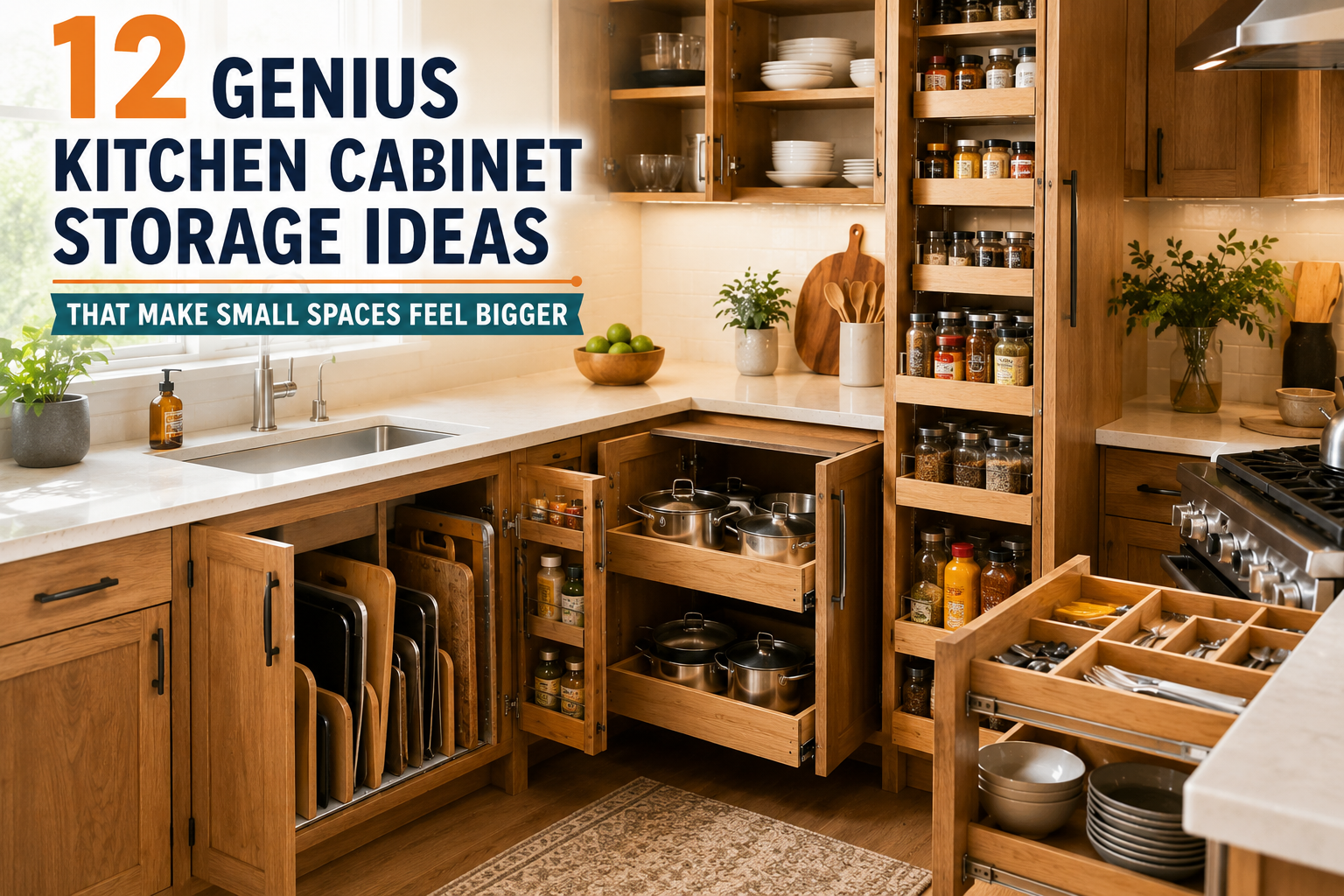
A small kitchen doesn’t necessarily need more cabinets.
Sometimes, it simply needs to make better use of the cabinets it already has.
Deep shelves, awkward corners, wasted vertical space, messy drawers, and overflowing cupboards can make even a reasonably sized kitchen feel cramped.
Fortunately, there are plenty of simple ways to reclaim that unused space.
From pull-out organizers to shelf risers, here are 12 clever kitchen cabinet storage ideas that can help you organize more without making your kitchen feel crowded.

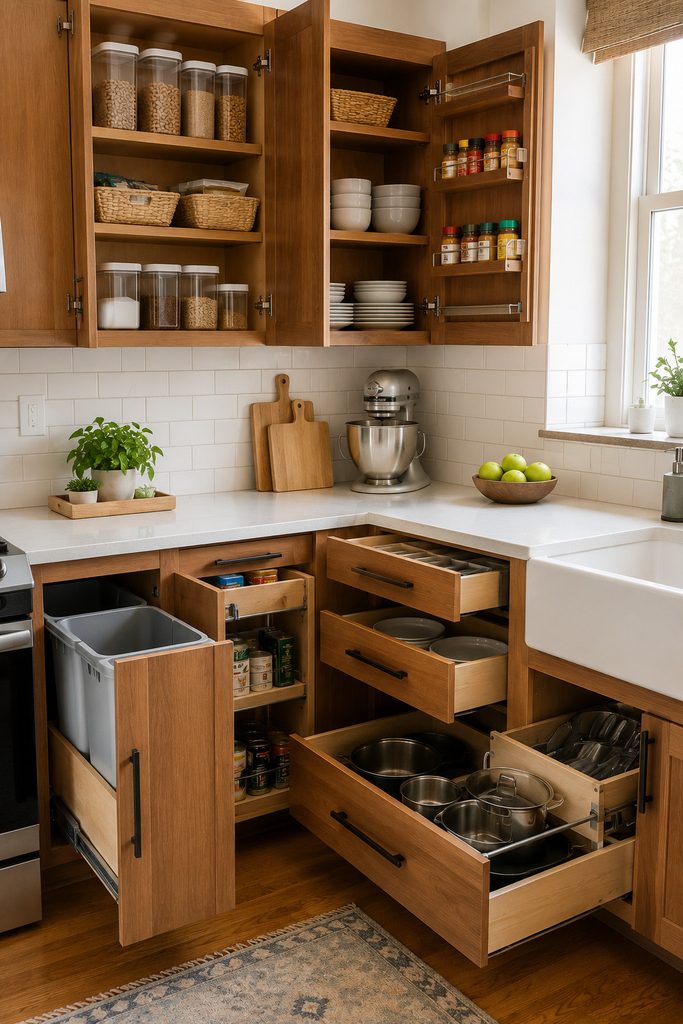
1. Add Pull-Out Cabinet Organizers
Deep lower cabinets often look spacious until you actually try to use them.
Items at the back become difficult to reach, so the front fills up while valuable space behind it goes unused.
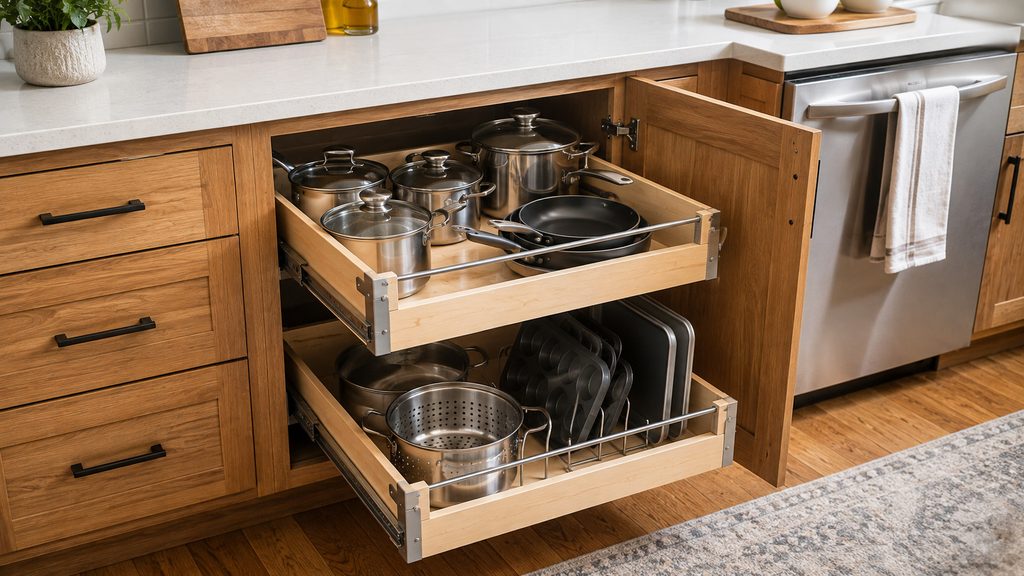
A pull-out cabinet organizer can turn that deep space into accessible storage.
Instead of reaching behind pots, bottles, or cleaning supplies, you simply slide the organizer forward.
Great for storing:
- Pots and pans
- Food containers
- Cleaning products
- Bottles
- Pantry goods
- Small appliances

SHOP THIS IDEA
→ [SEE PULL-OUT CABINET ORGANIZERS]
(paid link)
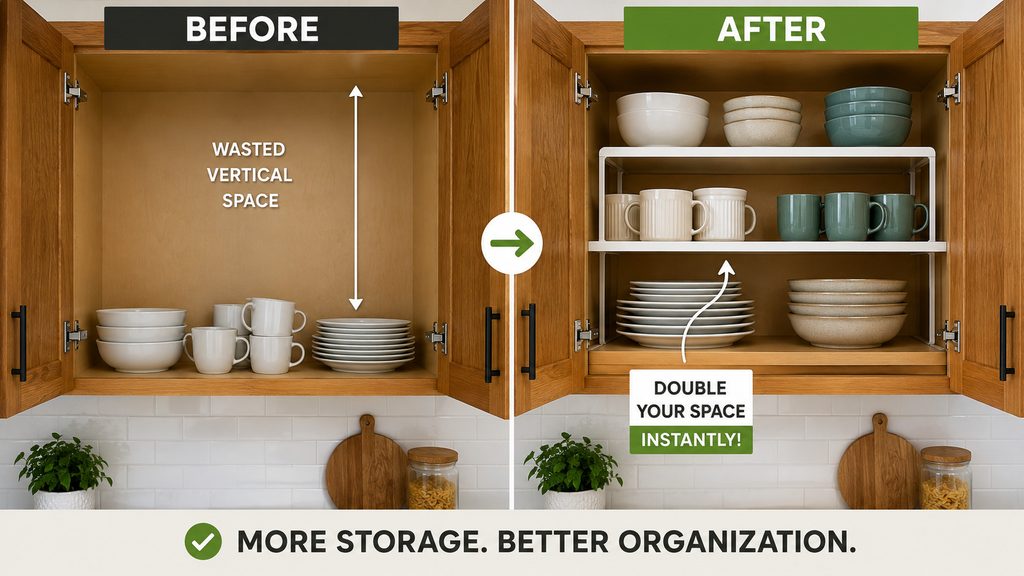
2. Double Your Shelf Space With Shelf Risers
One of the most overlooked areas inside a cabinet is the empty space above short items.
Imagine a shelf filled with coffee mugs.
There may be another 6 to 10 inches of unused vertical space above them.
A simple shelf riser creates another storage level without requiring permanent changes to the cabinet.
Perfect for:
- Plates
- Bowls
- Cups
- Mugs
- Canned foods
- Pantry containers
EASY SPACE-SAVING UPGRADE
→ [BROWSE CABINET SHELF RISERS]
(paid link)
3. Turn Cabinet Doors Into Storage
The inside of a cabinet door is often completely unused.
That’s valuable real estate in a small kitchen.
Slim door-mounted organizers can provide convenient storage without taking up another shelf.
Depending on the organizer and available clearance, you might use this space for:
- Cutting boards
- Foil
- Plastic wrap
- Small spice containers
- Cleaning supplies
- Pot lids
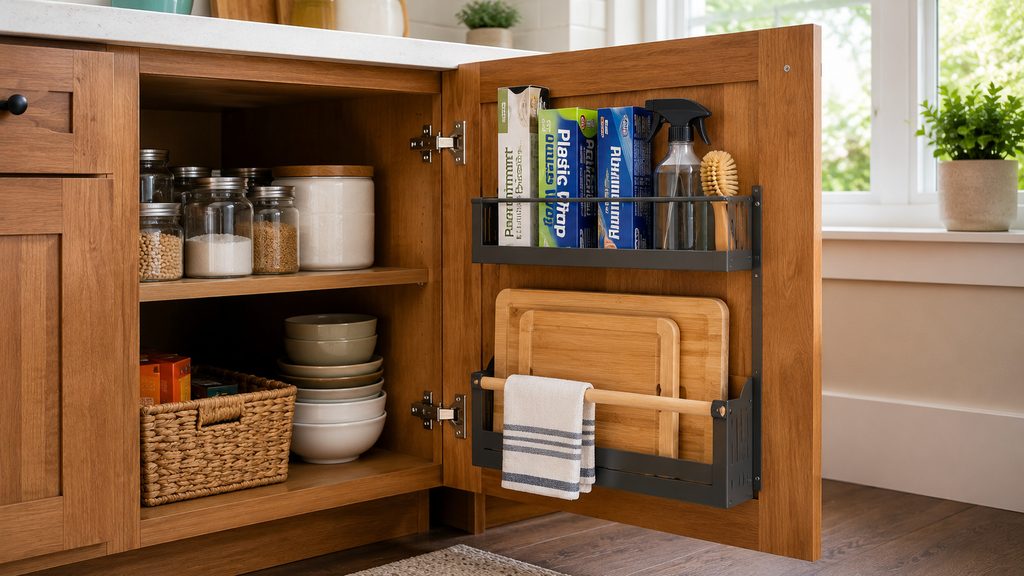
Important: Measure the cabinet carefully and check that the organizer won’t collide with shelves or items when the door closes.
→ [SEE CABINET DOOR ORGANIZERS]
(paid link)
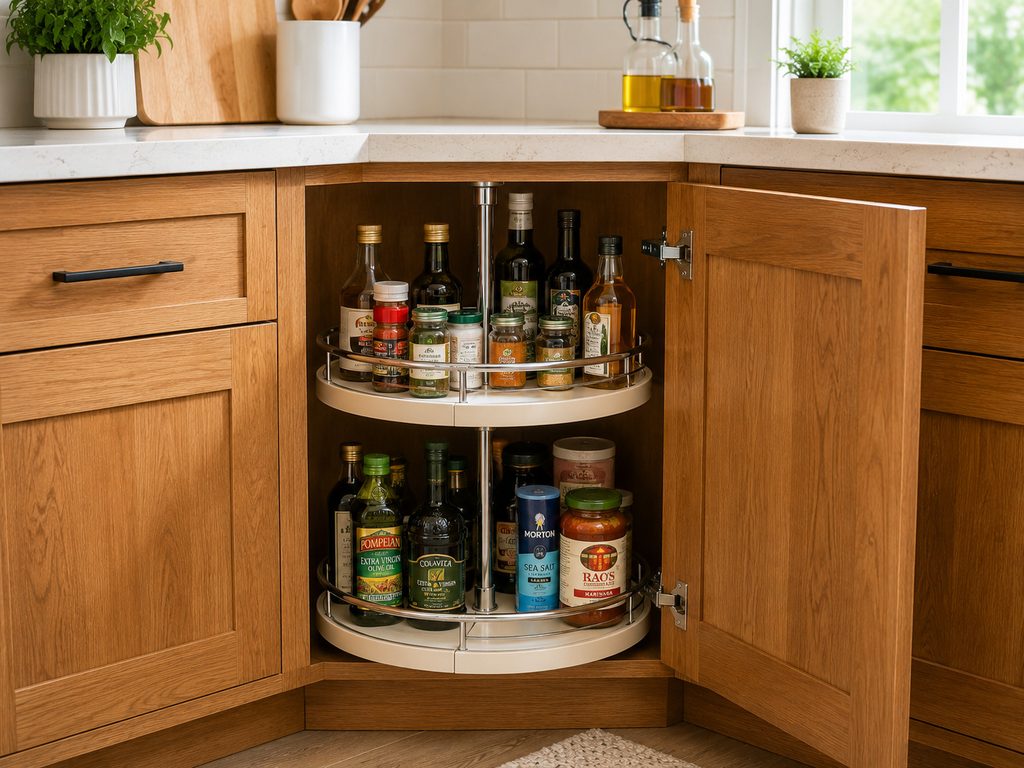
4. Organize Awkward Corner Cabinets With a Lazy Susan
Corner cabinets can provide plenty of storage, but they’re notoriously awkward.
Items disappear into the back, and eventually you forget what’s there.
A rotating organizer or Lazy Susan can make frequently used items much easier to access.
Give it a spin instead of moving several containers just to reach one bottle.
Works well for:
- Oils
- Sauces
- Condiments
- Spices
- Baking ingredients
- Pantry jars

MAKE THE CORNER USEFUL
→ [SEE LAZY SUSAN CABINET ORGANIZERS]
(paid link)
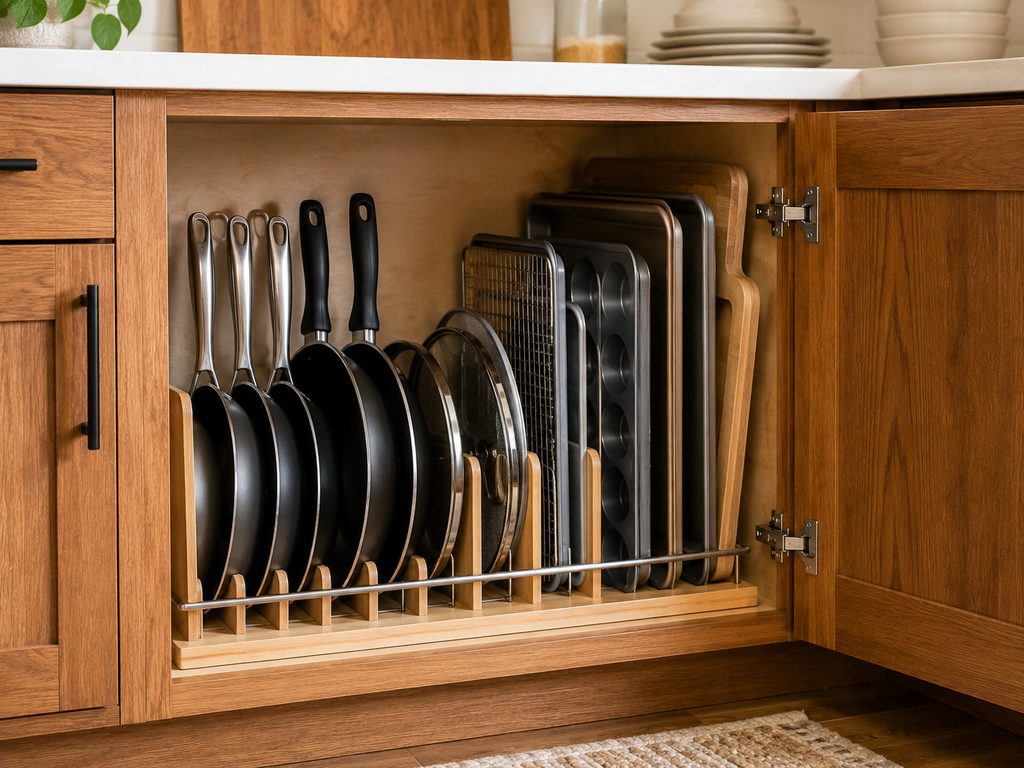
5. Stop Stacking Pans and Use a Pan Organizer
Stacking frying pans seems efficient until you need the pan at the bottom.
Then everything has to come out.
A vertical or adjustable pan organizer lets you store cookware in separate slots.
That can make it much easier to grab exactly what you need.
Some organizers can also accommodate:
- Frying pans
- Baking trays
- Cutting boards
- Pot lids
- Muffin tins
→ [BROWSE PAN & COOKWARE ORGANIZERS]
(paid link)
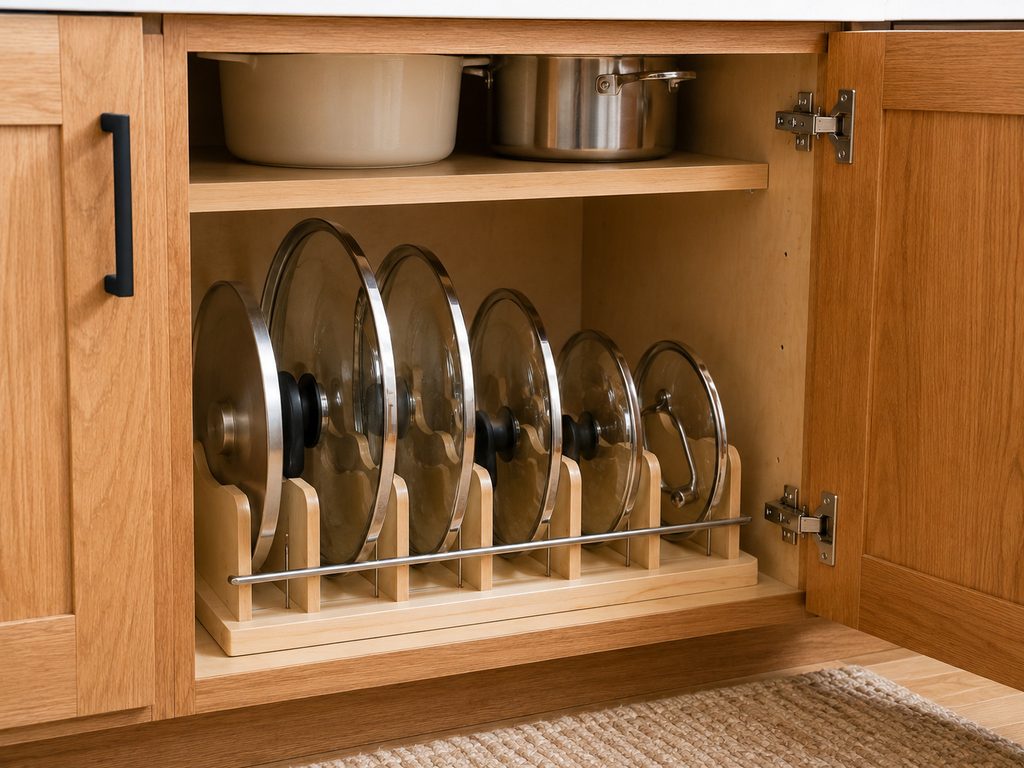
6. Give Pot Lids Their Own Storage Area
Pot lids create a surprisingly large storage problem.
They’re awkward to stack, can slide around, and often consume space that could be used more efficiently.
A dedicated lid organizer keeps them upright and separated.
Depending on your kitchen layout, it can be positioned:
- Inside a cabinet
- Inside a deep drawer
- Against a cabinet door
- Beside pots and pans
(paid link)
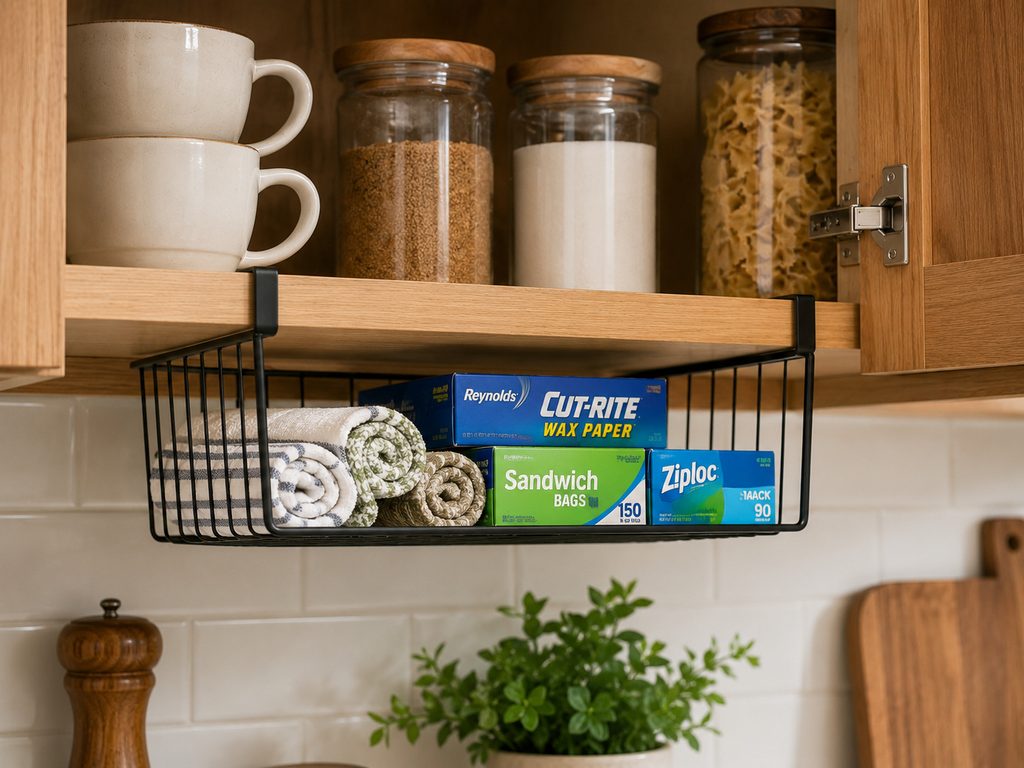
7. Use Under-Shelf Baskets
Here’s another place where kitchens often waste space.
Directly underneath cabinet shelves.
An under-shelf basket hangs beneath an existing shelf and creates a shallow additional storage zone.
It’s particularly useful for lightweight items that otherwise end up scattered around the cabinet.
Consider using one for:
- Kitchen towels
- Food wraps
- Small packets
- Coffee supplies
- Lightweight containers
USE THE SPACE YOU ALREADY HAVE
→ [SEE UNDER-SHELF STORAGE BASKETS]
(paid link)
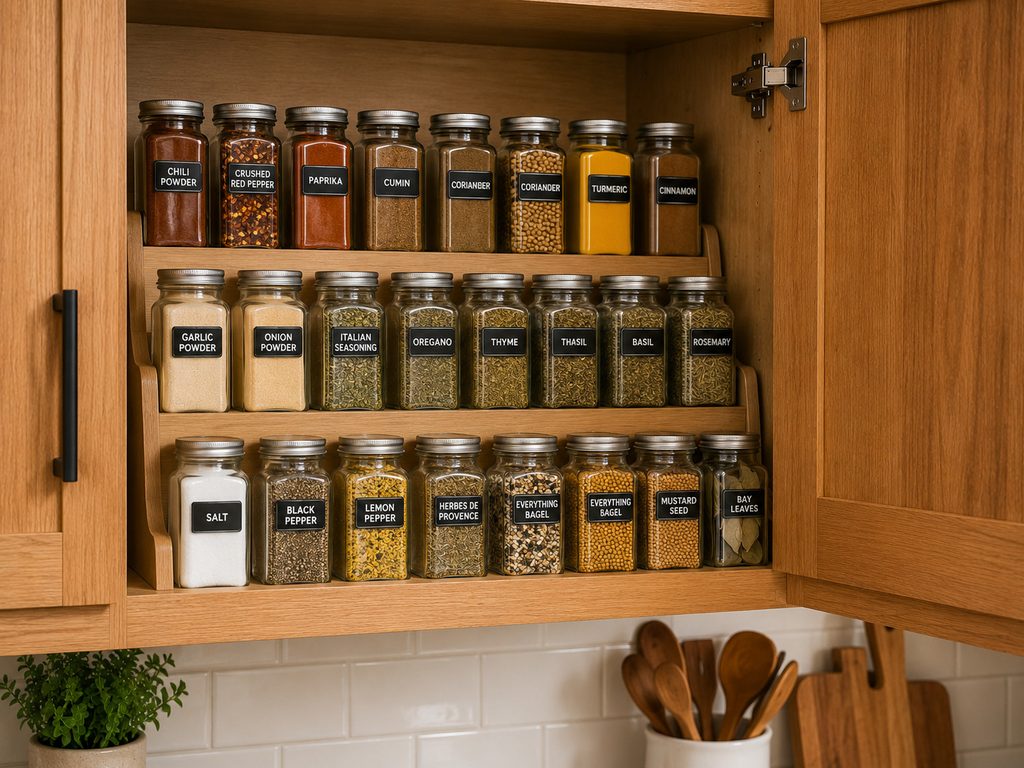
8. Create a Dedicated Spice Cabinet
Spice jars can turn into chaos surprisingly quickly.
Rows of identical-looking bottles get pushed behind each other, making it difficult to see what you already have.
A tiered spice rack raises the jars at the back so they’re easier to identify.
Another option is a pull-out spice organizer for narrow cabinet spaces.
(paid link)
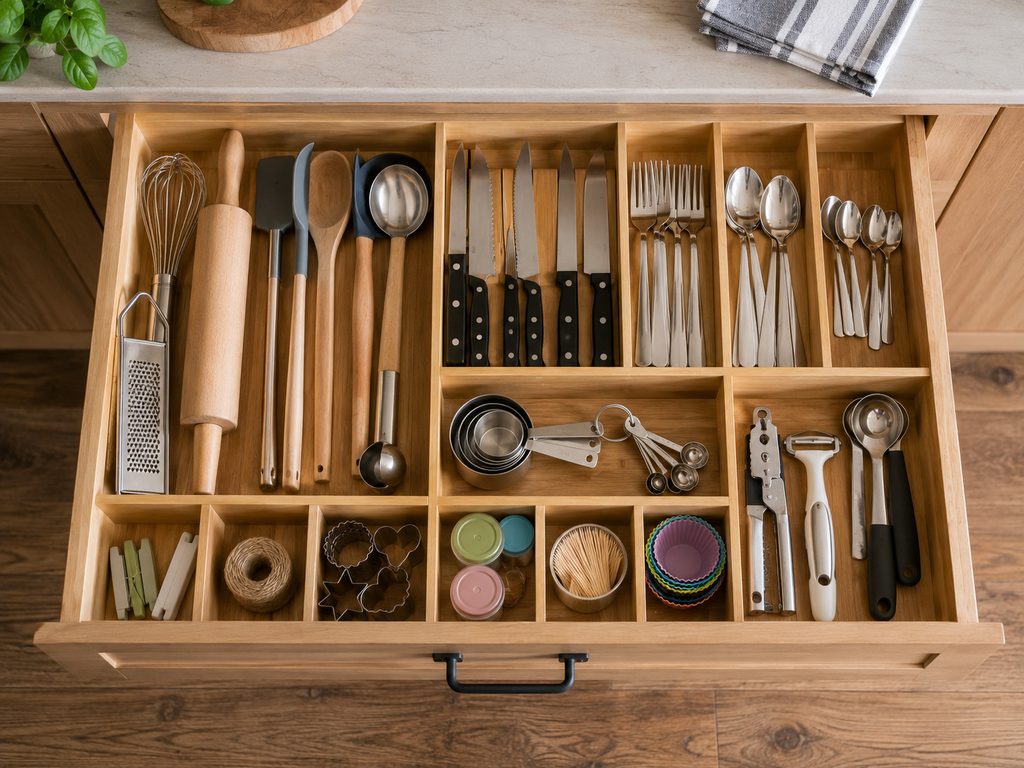
9. Divide Deep Drawers Into Zones
Large kitchen drawers provide plenty of space, but without organization they can quickly become junk drawers.
Dividers allow you to create dedicated sections.
For example:
Zone 1: cooking utensils
Zone 2: knives and accessories
Zone 3: measuring tools
Zone 4: serving utensils
Adjustable dividers can be especially useful because you can customize the layout around the items you already own.
ORGANIZE THE DRAWER
→ [SEE ADJUSTABLE DRAWER DIVIDERS]
(paid link)
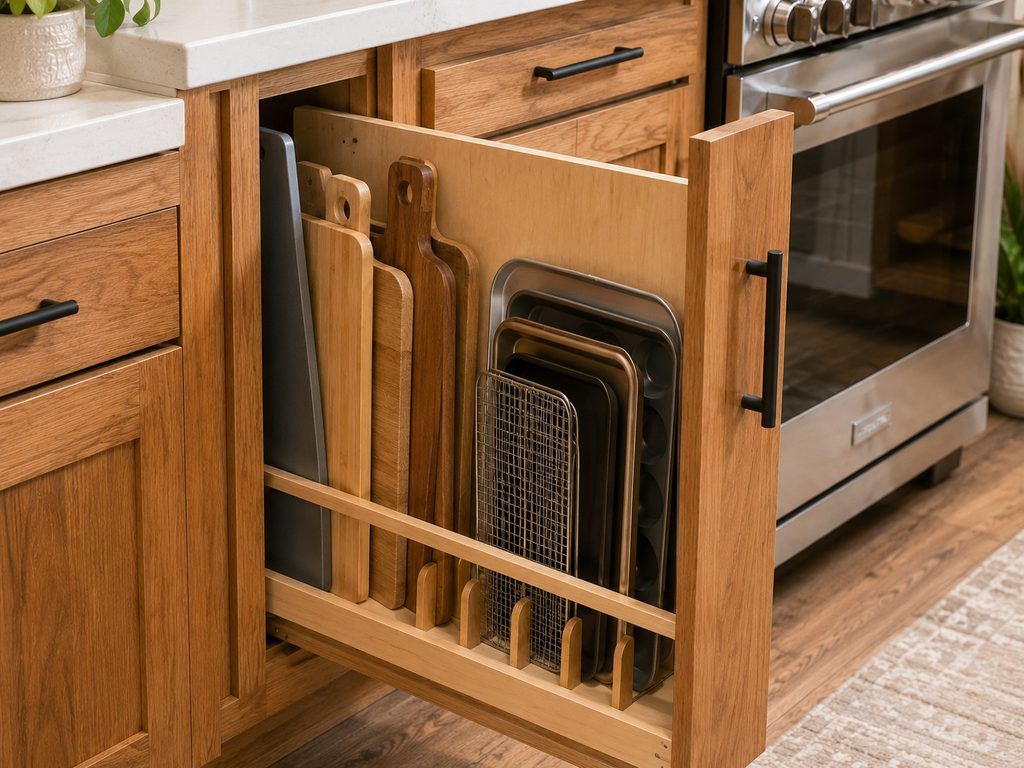
10. Store Cutting Boards Vertically
Cutting boards and baking sheets don’t need to lie flat.
Vertical storage can make much better use of narrow cabinet spaces.
Use dividers to create individual slots so each board or tray can slide in and out independently.
This works particularly well for:
- Wooden cutting boards
- Baking sheets
- Cooling racks
- Serving trays
- Muffin tins
→ [SEE VERTICAL CABINET DIVIDERS]
(paid link)
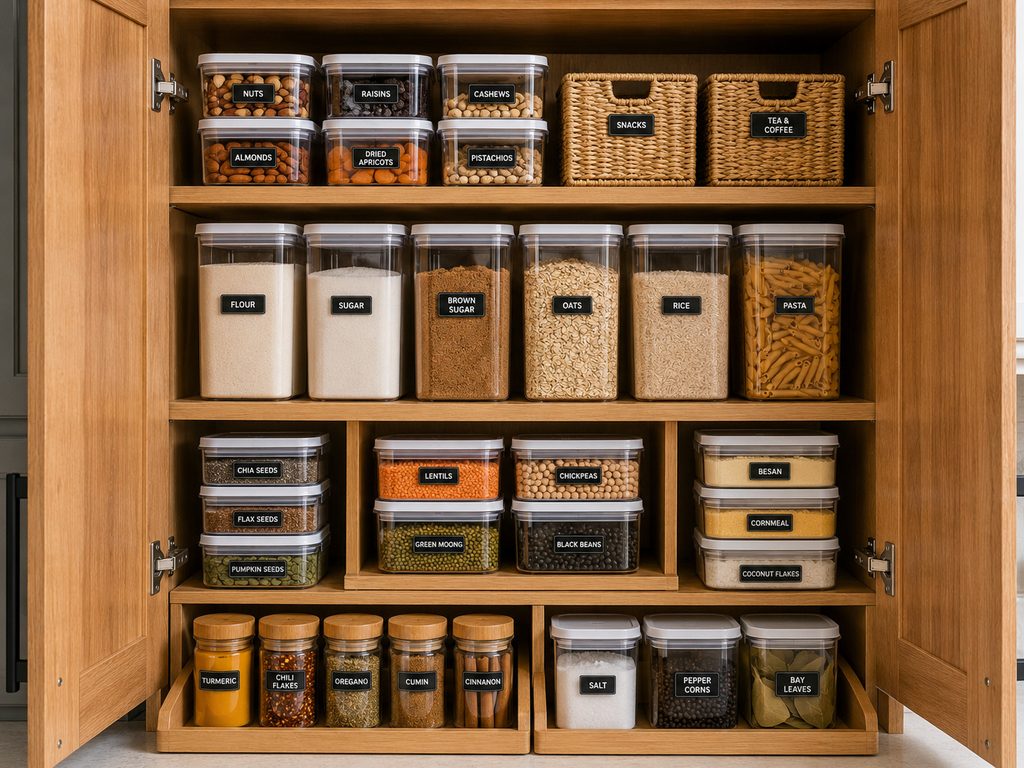
11. Use Stackable Pantry Containers
Food packaging comes in different shapes and sizes.
That isn’t ideal when you’re trying to maximize limited cabinet space.
Stackable containers can create a more consistent storage system.
They can be useful for dry foods such as:
- Rice
- Pasta
- Cereal
- Flour
- Sugar
- Oats
Clear containers also make it easier to see how much is left.
CREATE A CLEANER PANTRY
→ [BROWSE STACKABLE PANTRY CONTAINERS]
(paid link)
12. Add a Pull-Out Trash and Recycling System
A trash bin sitting in the open can consume valuable floor space and make a small kitchen feel more cluttered.
If your cabinet layout permits it, a pull-out waste system can conceal trash and recycling bins inside a lower cabinet.
Slide the cabinet open when needed and push everything out of sight afterward.
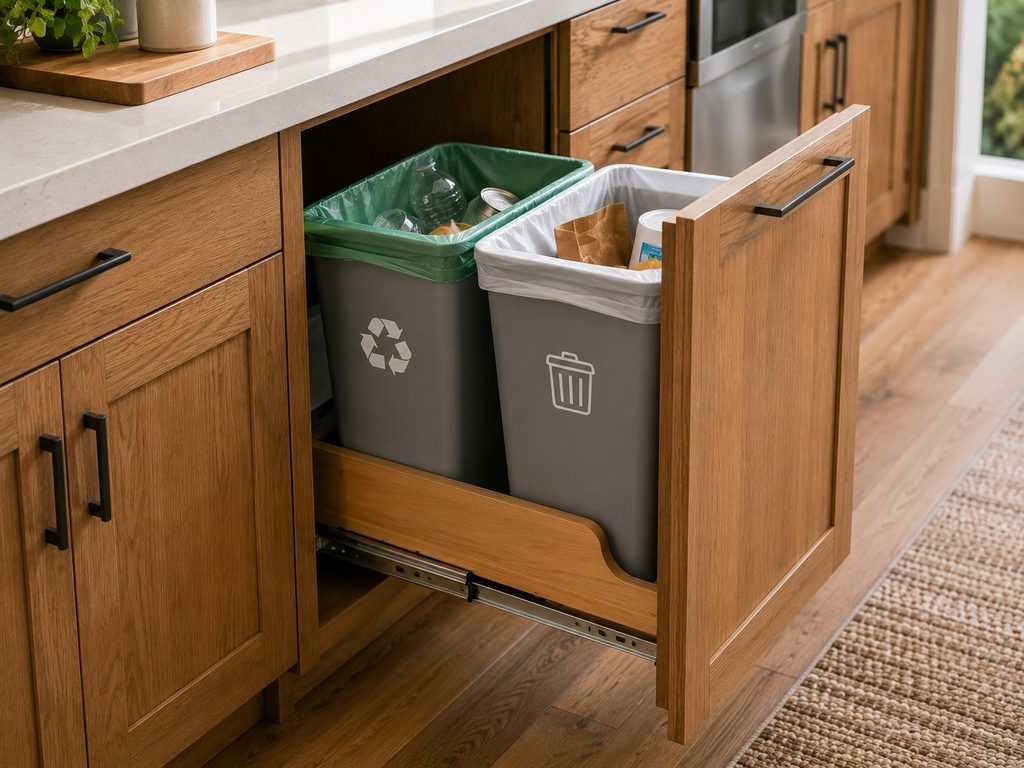
Before buying, carefully check:
- Cabinet width
- Cabinet depth
- Bin height
- Plumbing or other obstructions
- Mounting requirements
→ [SEE PULL-OUT TRASH CABINET SYSTEMS]
(paid link)
Which Kitchen Cabinet Organizers Are Most Useful?
You don’t need to buy every organizer on this list.
Start with the storage problem that’s causing the most frustration.
| Your Problem | Storage Idea |
|---|---|
| Can’t reach items at the back | Pull-out organizer |
| Too much empty vertical space | Shelf riser |
| Crowded cabinet shelves | Door organizer |
| Awkward corner cabinet | Lazy Susan |
| Messy pans | Pan organizer |
| Loose pot lids | Lid organizer |
| Wasted space below shelves | Under-shelf basket |
| Can’t find spices | Tiered spice rack |
| Messy drawers | Drawer dividers |
| Stacked cutting boards | Vertical divider |
| Messy food packaging | Stackable containers |
| Visible trash cans | Pull-out waste system |
Ready to Organize Your Kitchen?
You don’t need a larger kitchen to create more usable storage.
Sometimes the biggest improvement comes from making every inch of the cabinets you already own work harder.
→ [EXPLORE KITCHEN CABINET ORGANIZERS]
(paid link)
How to Choose Cabinet Organizers Before Buying
Before ordering an organizer, don’t rely on the product photo alone.
Measure First
Measure the usable width, depth and height inside your cabinet.
Remember to account for hinges, pipes, shelf supports and door frames.
Think About Accessibility
Ask yourself what you use most often.
Frequently used items should usually be easier to reach than appliances or cookware you only use occasionally.
Don’t Over-Organize
Buying too many organizers can actually reduce usable space.
Solve a specific problem rather than adding an organizer simply because it looks attractive.
Check the Mounting Method
Some products simply sit inside the cabinet.
Others may require:
- Adhesive
- Screws
- Rails
- Door mounting
- Shelf attachment
Check the installation requirements before ordering.
Consider Weight
A lightweight basket suitable for kitchen towels may not be appropriate for heavy cookware.
Always follow the manufacturer’s weight and installation recommendations.
Small Kitchen Storage Ideas That Don’t Require Buying Anything
Before purchasing organizers, try reorganizing what you already have.
Remove items you rarely use.
Group similar things together.
Move frequently used cookware closer to the cooking area.
Store occasional-use appliances elsewhere if practical.
Use existing containers to group smaller items.
Sometimes decluttering creates more usable storage than adding another organizer.
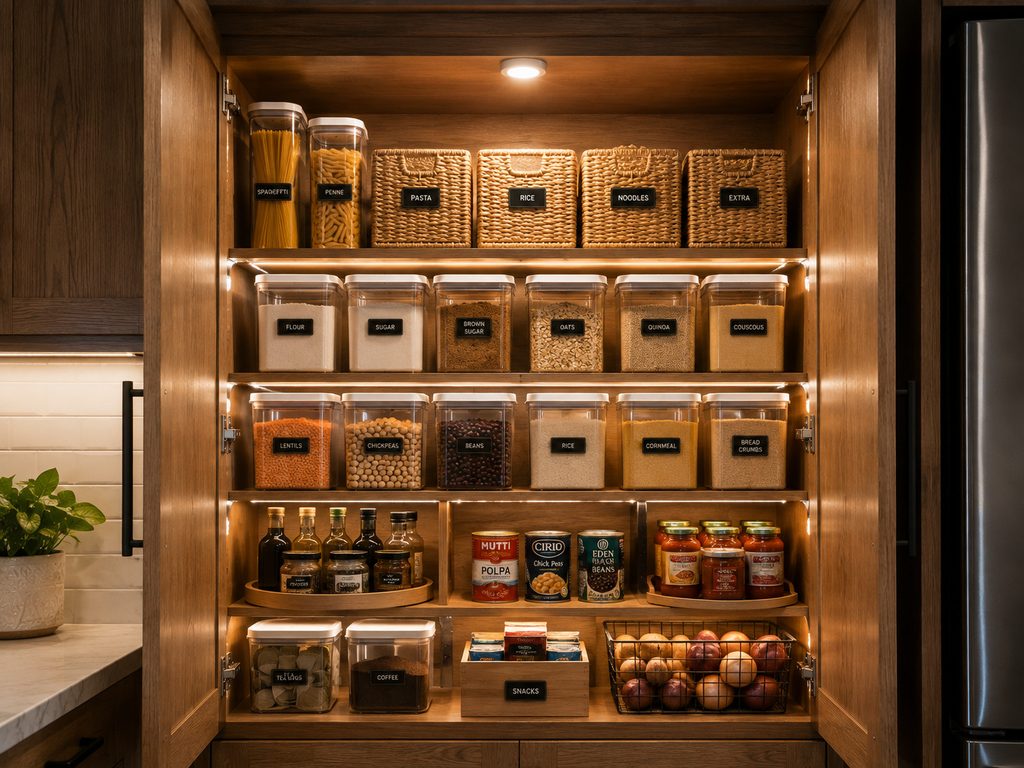
Bonus Idea: Combine Organization With Hidden Cabinet Lighting
Once your cabinets are organized, lighting can make deep storage spaces even easier to use.
A small motion-activated light can be particularly useful inside a deep pantry or lower cabinet.
If you’re interested in that upgrade, read:
10 Genius Hidden Cabinet Lighting Ideas
This internal link is particularly useful because someone interested in cabinet organization is also a strong candidate for cabinet-lighting products.
Frequently Asked Questions
How can I add more storage to a small kitchen?
Start by using areas that are commonly wasted, such as vertical shelf space, cabinet doors, deep cabinet backs and the area underneath shelves. Shelf risers, pull-out organizers and door-mounted storage can help make those areas more usable.
How do I organize very deep kitchen cabinets?
Pull-out organizers are particularly useful because they bring items from the back toward you. Grouping similar products in removable bins can also make deep cabinets easier to manage.
How can I maximize vertical space inside cabinets?
Shelf risers, stackable containers and vertical dividers can help utilize the full height of a cabinet instead of storing everything on a single level.
What should I store in lower kitchen cabinets?
Lower cabinets are commonly useful for heavier items such as pots, pans, small appliances and food-storage containers. Pull-out organizers can make these items easier to access.
How do I organize a corner kitchen cabinet?
A rotating Lazy Susan or other corner-specific organizer can help make items at the back easier to reach.
Are cabinet organizers worth buying?
They can be worthwhile when they solve a specific storage problem. Measure your cabinet first and choose an organizer based on the items you actually need to store rather than appearance alone.
How can I make a small kitchen look less cluttered?
Keeping countertops relatively clear can make a noticeable difference. Move suitable items into organized cabinets, group similar objects together, and remove kitchen items you rarely use.
A Small Kitchen Can Still Have Smart Storage
Limited space doesn’t automatically mean poor storage.
The trick is to stop thinking only about how many cabinets you have and start thinking about how efficiently every cabinet is being used.
A pull-out organizer can make a deep cabinet accessible.
A shelf riser can create a second level of storage.
A door organizer can turn unused space into useful storage.
A few drawer dividers can transform a chaotic drawer.
Start with the cabinet that annoys you the most.
Fix that one first.
Then move to the next.
Find the Right Organizer for Your Kitchen
→ [EXPLORE KITCHEN STORAGE & ORGANIZATION IDEAS]
(paid link)